
Dallas, TX USA
Info(at)Everyblm.com
Written by Contributing Author, Charles Wekesa
This is the first cost of fatherhood: the pain of letting go. Of watching someone you love make choices you know will hurt them. Of standing back when every instinct in you wants to intervene. Our heavenly Father does the same. He gave Adam and Eve freedom—even when it meant disobedience. He gives us the same. Real love, after all, never coerces. It releases.
Reframing the Parable: The Good Father, Not the Prodigal Son
When most people hear Luke 15:11-32, they immediately think of the Prodigal Son. But this parable could just as easily be called “The Good Father.” The central figure isn’t the wayward son—it’s the father whose love is costly, patient, and radically redemptive. Jesus’ story challenges our assumptions about parenting, grace, and even God Himself. In a time when many fathers are undervalued or absent, this parable offers a powerful image of what godly fatherhood looks like: self-giving, steadfast, and willing to bear the cost of love.
Fatherhood, as portrayed by Jesus, is less about control and more about compassion. Less about demanding respect and more about demonstrating relentless mercy. And it begins with the hardest act of all—letting go.
The Cost of Letting Go: When Love Means Releasing
The parable begins with a gut punch: the younger son demands his inheritance. In Jewish culture, this was the equivalent of saying, “I wish you were dead.” The inheritance only came after the father’s passing—so the son’s request wasn’t just rude; it was an open wound.
Yet the father doesn’t argue. He doesn’t try to manipulate or shame his son into staying. He lets him go.
This would’ve shocked Jesus’ listeners. In Middle Eastern culture, the family estate was sacred. It wasn’t just property—it was identity, honor, and generational legacy. Liquidating it to fund a reckless adventure would’ve brought shame not just to the family but to the entire village.
Still, the father divides the land and watches his son disappear.
This is the first cost of fatherhood: the pain of letting go. Of watching someone you love make choices you know will hurt them. Of standing back when every instinct in you wants to intervene.
Our heavenly Father does the same. He gave Adam and Eve freedom—even when it meant disobedience. He gives us the same. Real love, after all, never coerces. It releases.
The Cost of Welcoming Back: Grace in Motion
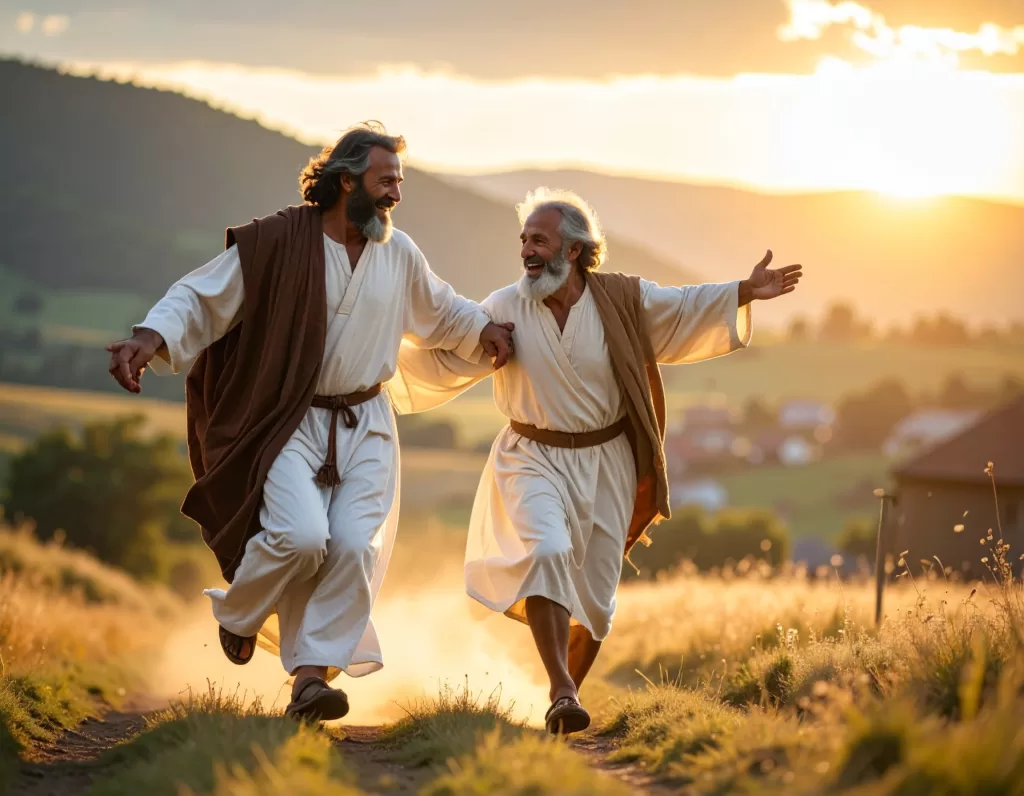
The son eventually returns, broken and rehearsing his apology like a man pleading for scraps. But the father doesn’t even let him finish. Instead, he runs to him.
That detail is stunning. In Jesus’ day, dignified men didn’t run—especially not elderly patriarchs. Running meant pulling up your robes, exposing your legs, and inviting humiliation. But this father doesn’t care about appearances. He cares about his son.
He embraces him, robes him, rings him, and feeds him. No lectures. No cold stares. Just a feast.
It’s not cautious forgiveness; it’s scandalous grace.
And grace always costs. The father bears the shame of his son’s rebellion publicly. He bears the whispers of neighbors and the resentment of his older child. He absorbs all of it to reconcile with the one who wandered.
This mirrors what God did for us. On the cross, He bore our shame to welcome us home. Grace is never free. It’s just freely given.
The Cost of Celebrating: Joy That Offends
If the story ended at the feast, it would be inspiring. But Jesus includes a twist—the elder brother refuses to join the celebration.
He’s bitter. After all, he stayed. He worked. He obeyed. And now the rebel gets music and meat? It feels unjust.
The father responds with tenderness: “Son, you are always with me… but this brother of yours was dead and is alive again.”
Here, Jesus reminds us that grace can offend our sense of fairness. That joy can be costly. That mercy doesn’t always make human sense.
Fatherhood means choosing joy—even when others disapprove. It means throwing parties for repentance. It means prioritizing reconciliation over reputation.
Fathering Is Costly: A Sacred and Silent Work
This parable paints a picture of fatherhood that’s deeply emotional, spiritual, and sacrificial. It requires wisdom to know when to let go. Patience to wait. Grace to welcome. And strength to celebrate.
None of it comes with applause. There are no trophies for fathers who stay, forgive, and quietly guide. But heaven notices. And Jesus highlights it for a reason.
If you’re a father, grandfather, godfather, or mentor, know this: your work matters. You are living parables. Your choices echo into generations. Every time you forgive, every time you pray, every time you resist anger and choose grace—you are modeling God’s heart.
When Fatherhood Is Absent or Painful
Not everyone celebrates Father’s Day with fondness. For some, it’s a reminder of what was lost—or never had. An absent father. A strained relationship. A wound still healing.
This parable speaks to that too. Because while earthly fathers may fail, the heavenly Father runs toward us. He isn’t absent. He isn’t angry. He’s waiting.
And the invitation is still open. Whether you are far from God or just unsure where you stand, He welcomes you back. No list of failures. No condemnation. Just open arms and a robe with your name on it.
When the Elder Brother Lives in Us
Many of us, if we’re honest, have a bit of the elder brother inside. We want justice. We tally up good deeds. We wonder why others get grace when we’ve worked so hard.
But the father’s words are for us too: “Everything I have is yours.”
God isn’t stingy. He isn’t running out of grace. There’s room at the table for the rebellious and the righteous. And the question for us is: Can we celebrate that? Can we rejoice when others receive what they don’t deserve—because we’ve received the same?
The Call to Grace: We Give What We’ve Received
Grace isn’t just something we accept; it’s something we extend. The love we’ve received from the Father is the love we’re meant to give to our kids, to our parents and to our communities.
This Father’s Day season, maybe the call is twofold: to thank the fathers in our lives and to reflect the Father to others. To forgive when it’s hard. To celebrate others’ return. To love without keeping score.
A Father’s Day Prayer
Loving Father, we thank You for the gift and calling of fatherhood. For fathers who reflect Your strength and tenderness, we give, You praise. For those for whom this day is painful, bring comfort and peace. Empower every father and father-figure to walk in wisdom, lead with love, and mirror Your heart. And for all of us—children of earthly and heavenly Fathers—help us to extend the same grace we have received. In the name of Jesus, the storyteller of mercy, Amen.