
Dallas, TX USA
Info(at)Everyblm.com
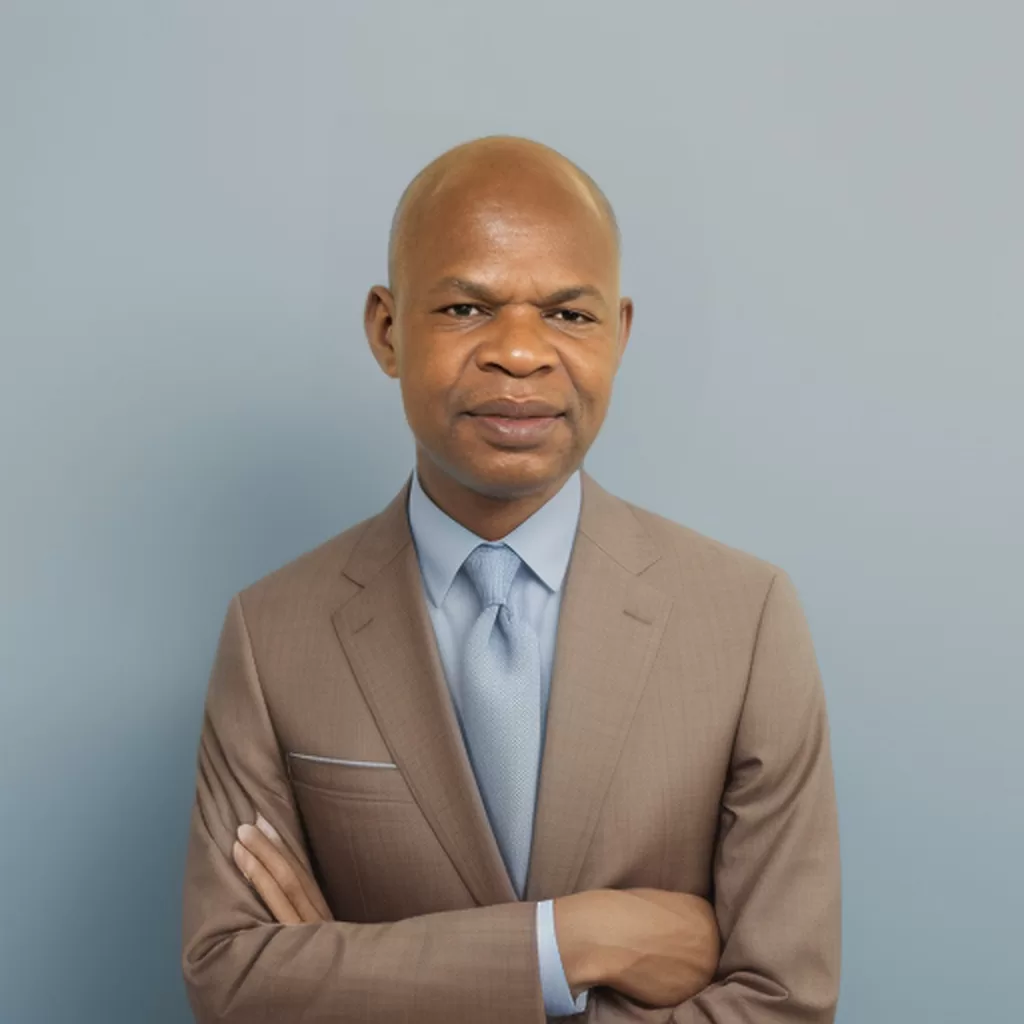
Written by Contributing Author, Charles Wekesa
Despite its popularity in some circles, the push for reparations is misguided. It confuses envy with justice, punishes personal achievement, and imposes collective guilt on individuals who bear no responsibility for slavery or Jim Crow. Far from healing the nation, it threatens to inflame racial divisions and perpetuate dependency. To understand why, we must examine the origins, logic, and consequences of the reparations movement — and why a better, more unifying path exists for Black America.

The Modern Obsession with Reparations
“Reparations, reparations, reparations.” The word has become a political rallying cry in recent years — repeated endlessly by activists, journalists, and politicians seeking to address America’s historical injustices. Since the George Floyd protests of 2020, the issue of reparations has moved from the margins of academic debate to the center of national discourse. States like California and cities such as San Francisco have begun exploring proposals to compensate black Americans for the legacy of slavery and systemic discrimination. Yet, beneath the emotion and rhetoric, the question remains: Would reparations bring justice or division?
Despite its popularity in some circles, the push for reparations is misguided. It confuses envy with justice, punishes personal achievement, and imposes collective guilt on individuals who bear no responsibility for slavery or Jim Crow. Far from healing the nation, it threatens to inflame racial divisions and perpetuate dependency. To understand why, we must examine the origins, logic, and consequences of the reparations movement — and why a better, more unifying path exists for Black America.
The Origins of the Current Reparations Debate
The modern reparations movement gained momentum in 2014 with the publication of Ta-Nehisi Coates’s essay “The Case for Reparations” in The Atlantic. Coates argued that centuries of slavery, followed by the oppressive Jim Crow system, deprived black Americans of the fruits of their labor and created a persistent racial wealth gap. His article inspired widespread discussion and influenced the Democratic Party’s platforms in subsequent elections.
However, the claim that slavery and Jim Crow are the principal causes of the wealth gap between black and white Americans is not supported by the evidence. If this were true, one would expect the disparities to be greatest in the South — the region most shaped by slavery — yet wealth gaps between blacks and whites are narrower in Southern states than elsewhere. This contradiction suggests that current disparities arise more from modern social, educational, and family dynamics than from historical injustices. As such, the reparations argument rests on an oversimplified view of causation.
Misunderstood Historical Precedents
Advocates of reparations often point to historical examples to justify their demands. The most famous is General William Tecumseh Sherman’s Special Field Order No. 15, issued in 1865, which promised “40 acres and a mule” to newly freed black families in parts of the South. While the order was indeed radical for its time, it applied only to a narrow coastal region and was quickly rescinded by President Andrew Johnson. It was never intended as a national policy for reparations.
Similarly, claims that reparations for Native American tribes provide a legal precedent are flawed. Those payments arose from treaty violations — specific breaches of law recognized by the U.S. Congress — not broad moral atonement. In the case of slavery, there are no treaties or legally binding agreements to enforce, only moral grievances.
Even the often-cited case of Belinda Sutton, an enslaved woman in Massachusetts who received payments after petitioning for compensation, is misunderstood. Her restitution was granted under loyalist property confiscation laws, not as reparations for slavery. Each of these historical examples reveals the same truth: there is no legal, moral, or constitutional precedent for the kind of sweeping reparations being proposed today.
The Problem of Injury and Responsibility
At the heart of justice lies the principle of causation — identifying both an injured party and an injurer. In the case of reparations, this link collapses. None of the living generations of black Americans experienced slavery, and none of the living generations of white Americans practiced it. The attempt to impose financial responsibility on individuals today for the acts of long-dead ancestors defies both moral and legal logic.
If reparations require proof of injury, how would such injury be measured? Is it through income levels, incarceration rates, or health disparities? These metrics fluctuate over time and reflect multiple social factors, not a direct consequence of slavery. For example, the income gap between black and white households widened between 1967 and 2014 — long after the end of segregation and during a period of major government spending on social programs. Similarly, black incarceration rates are higher today than during Jim Crow. These realities challenge the notion that historical oppression alone explains current inequality.
Justice demands personal responsibility — but reparations seek to punish millions who had no hand in past injustice while rewarding millions who have not been personally harmed by it. It replaces moral accountability with racial guilt and collective punishment, violating foundational Western principles of fairness.
The Economic Absurdity – Costs Without Limits
The cost of reparations represents another insurmountable problem. In California, a state that never allowed slavery, proposed reparation estimates for black residents exceed $500 billion. The city of San Francisco has already considered allocating $5 million per black resident — an impossible figure in any practical budget. These staggering numbers reveal that reparations are not designed to correct injustice but to serve as symbolic wealth transfers intended to make a political statement.
Ta-Nehisi Coates himself admitted that reparations might be more about “wrestling publicly with the question” than achieving concrete outcomes. Yet, for many advocates, the astronomical cost is part of the appeal — it functions as a form of moral punishment for the nation. In reality, such a policy would deepen the federal deficit, create resentment, and do little to improve the material well-being of black Americans. As history shows, massive government spending has rarely fixed deep social problems.
Racial Confusion – Who Qualifies?
Even if the financial hurdles were overcome, defining eligibility for reparations poses an impossible dilemma. Who qualifies as black? How do we prove descent from slaves? The very attempt to define eligibility revives the racist “one-drop rule” — once used to exclude, now used to include. In California’s model, even someone with a distant black ancestor could qualify, while a recent African immigrant whose family never experienced American slavery would not.
Author Michael Harriot has noted that about 3.5 percent of self-identified white Americans have black ancestry, while millions of black immigrants from Africa and the Caribbean arrived long after slavery’s abolition. Would their descendants be excluded? These questions reveal how unworkable and divisive the idea truly is. Reparations cannot be implemented without reinforcing racial categories the nation has spent generations trying to transcend.
The Constitutional and Legal Barriers
Beyond the moral and social problems, reparations face steep constitutional obstacles. Slavery, however evil, was legal in the United States until the ratification of the 13th Amendment. Previous reparations, such as those for Native American tribes, involved illegal acts — treaty violations that courts could adjudicate. Reparations for slavery lack such a foundation.
Furthermore, any government policy that allocates funds based solely on race violates the Equal Protection Clause of the 14th Amendment and the Civil Rights Act of 1964. Recent Supreme Court rulings, including the 2023 decision ending race-based affirmative action, confirm that race-exclusive programs are unconstitutional. Thus, reparations would not only divide the nation but also defy its highest legal standards.
The Moral and Practical Consequences
Issuing checks to compensate for slavery risks trivializing one of history’s greatest evils. It suggests that the suffering of millions can be “paid off” through financial transactions, turning a moral tragedy into an accounting problem. It also encourages a dangerous moral hazard — the belief that every injustice can be solved with money.
Trillions have already been spent through programs like the New Deal, the War on Poverty, and the Great Society. These initiatives promised to uplift black Americans but produced mixed or negative results. Poverty, crime, and educational inequality persist despite vast public investment. Reparations, therefore, would repeat past mistakes — replacing empowerment with dependency and progress with resentment.
A Better Way Forward – Project 21’s Vision
Rather than perpetuating division through race-based policy, Project 21 offers an alternative vision rooted in unity, family, and opportunity. The organization believes true empowerment arises not from government handouts but from restoring the foundations of self-reliance and moral strength.
Key policy recommendations include:
What Every Black Life Matters Thinks
Every Black Life Matters (EBLM) views reparations through a biblical and conservative framework that prioritizes empowerment over entitlement. We argue that financial compensation for historical injustices, such as slavery, is neither just nor effective because current generations are not responsible for the actions of their ancestors. Instead, EBLM emphasizes personal responsibility, faith, family restoration, and economic independence as the true means to achieve healing and progress within Black communities. We contend that reparations foster division, dependency, and victimhood, while genuine justice should focus on strengthening families, expanding educational freedom, and promoting entrepreneurship. From our perspective, lasting equality and dignity come from cultivating self-reliance and moral renewal, not from government redistribution or race-based compensation. These proposals focus on empowerment through education, entrepreneurship, and family stability — not racial entitlement.
Conclusion – Rejecting Resentment, Embracing Renewal
Reparations promise justice but deliver division. They rest on collective guilt rather than personal responsibility, on envy rather than equality. They attempt to correct the past by punishing the innocent and rewarding the uninjured, violating both morality and law.
Black Americans deserve real progress, not symbolic gestures. True justice lies in strengthening families, expanding opportunity, and empowering individuals — not in reliving historical wounds. America’s greatness has always emerged from faith in freedom, personal responsibility, and the potential of every citizen. Rather than tearing the country apart over reparations, we should unite around policies that lift all Americans and honor the values that have sustained this nation since its founding.
Let us choose unity over resentment, empowerment over dependence, and opportunity over division. The future of Black America — and of America itself — depends on it.
Source Article
https://nationalcenter.org/what-reparations-means-for-black-america/
