
Dallas, TX USA
Info(at)Everyblm.com
Written by Contributing Author, Charles Wekesa

We at Every Black Life Matters (EBLM) firmly oppose to the recent federal court ruling that blocks the Trump-era policy limiting U.S. passport gender markers to “male” and “female.” We stand unapologetically for biological reality, traditional values, and the protection of women and children from what it views as harmful gender ideology. We reject the inclusion of nonbinary or transgender categories on official government documents, seeing such policies as part of a broader agenda that undermines truth, erodes moral and scientific standards, and destabilizes the foundations of American society. EBLM does not align with or support LGBTQ advocacy groups and believes that court decisions like this one further enable cultural confusion while threatening the legal and societal clarity needed to preserve family, faith, and freedom.
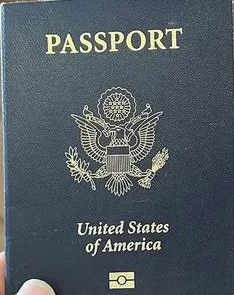
In a landmark legal development, a Biden-appointed federal judge has temporarily blocked the Trump administration’s attempt to restrict gender options on U.S. passports to only “male” and “female.” The move comes as part of a broader debate over gender identity, civil rights, and government policy in the United States. Judge Julia Kobick’s ruling not only halts the enforcement of the policy nationwide but also highlights critical legal and psychological implications for transgender, intersex, and nonbinary Americans.
Background: The Trump-Era Executive Order on Gender Identity
In early 2025, President Donald Trump signed an executive order titled “Defending Women from Gender Ideology Extremism and Restoring Biological Truth to the Federal Government.” The order directed all executive agencies to recognize only two sexes: male and female. It emphasized that these sexes are biologically determined, unchangeable, and form the cornerstone of American legal and cultural systems.
Following this directive, the U.S. Department of State swiftly implemented changes to passport application procedures. The most significant change was the elimination of the “X” gender marker, a designation that had been introduced to accommodate individuals who identify as nonbinary or intersex. Additionally, the policy suspended provisions that allowed individuals to change their gender marker to one that aligns with their gender identity rather than their assigned sex at birth.
Critics immediately denounced the policy as discriminatory and regressive, arguing that it targeted the transgender community and rolled back years of progress in civil rights. The media widely characterized it as an attack on transgender individuals’ ability to live openly and safely.
The Legal Challenge: Kobick’s Initial Injunction
The first legal challenge came from a group of six individuals who sued the federal government, claiming the passport policy violated their constitutional rights. They argued that the policy discriminated on the basis of sex and gender identity, caused psychological harm, and exposed them to increased risk of violence and harassment.
In April 2025, U.S. District Judge Julia Kobick ruled in favor of the plaintiffs, issuing an injunction that temporarily blocked the policy as it applied to those six individuals. Kobick, who serves the District of Massachusetts, noted that the plaintiffs were likely to succeed on the merits of their case. Her ruling emphasized that the policy appeared to be discriminatory and lacked a substantial government interest to justify its implementation.
Nationwide Impact: June 2025 Ruling Blocks Policy for All Americans
On June 18, 2025, Judge Kobick extended her earlier ruling, suspending the policy nationwide. This means that, at least temporarily, the Trump-era restriction on gender markers will not be enforced for any U.S. citizen.
In her ruling, Kobick stated that the policy is “arbitrary and capricious” and “rooted in irrational prejudice toward transgender Americans.” She highlighted that the government had failed to demonstrate how the policy served an important public interest. Instead, she emphasized that the policy imposed real harm on transgender and nonbinary individuals.
Psychological and Medical Evidence Cited in the Ruling
A critical component of Kobick’s decision involved referencing established medical standards for treating gender dysphoria. According to the ruling, possessing identity documents that align with one’s gender identity is a vital aspect of mental health care for transgender people.
Kobick cited data showing that transgender and nonbinary people who are forced to use ID documents that conflict with their gender identity face higher risks of:
The ruling stated, “Obtaining gender-concordant identity documents is part of the standard of care for treating gender dysphoria,” reinforcing the idea that denying these rights can have serious mental health consequences.
Arguments from the Trump Administration
Supporters of the Trump-era policy, including the President himself, argue that recognizing only two biological sexes is essential for maintaining social and legal order. The executive order contended that erasing sex distinctions undermines women’s rights and threatens the integrity of federal policy.
The order stated: “Efforts to eradicate the biological reality of sex fundamentally attack women by depriving them of their dignity, safety, and well-being.” It also warned that the inclusion of gender identity in legal documents could corrode the American legal system and cause widespread confusion in areas such as sports, prisons, and healthcare.
These arguments are central to a broader ideological debate in the U.S. over the role of gender in public life. While advocates argue for the rights of individuals to self-identify, opponents caution against what they see as the erasure of biological facts.
Legal and Constitutional Implications
Judge Kobick’s ruling touches on key constitutional issues, particularly those related to the Equal Protection Clause of the Fourteenth Amendment. By framing the policy as discriminatory and lacking justification, the ruling opens the door for a broader constitutional challenge against restrictive gender identity policies.
Legal experts suggest that this case could set a precedent in future battles over gender recognition, government-issued documentation, and civil liberties. If the policy is ultimately struck down, it may influence how other federal and state agencies handle gender identity.
Public Reaction and Political Context
The ruling has drawn praise from LGBTQ+ advocacy groups and civil liberties organizations. They see it as a victory for human dignity, mental health, and personal freedom.
Conversely, some conservative and women’s rights groups have criticized the decision, arguing that it undermines the clarity and integrity of legal documents. They contend that allowing individuals to self-identify their gender on official documents poses risks to public safety and institutional consistency.
This legal battle is occurring within a highly polarized political environment. With the 2024 election still fresh in public memory and the culture wars surrounding gender intensifying, the issue has become a symbolic flashpoint in American politics.
What This Means for Transgender Americans and Beyond
For now, transgender, nonbinary, and intersex individuals can continue to apply for U.S. passports that reflect their true gender identity, including the option to select “X” as a gender marker. This provides not only practical benefits in travel and employment but also a sense of legal recognition and dignity.
The case underscores the importance of accurate and inclusive documentation as a civil right. As Kobick’s ruling makes clear, identity documents are more than bureaucratic necessities—they are deeply personal affirmations of who individuals are.
What Every Black Life Matters Thinks
We at Every Black Life Matters (EBLM) firmly oppose to the recent federal court ruling that blocks the Trump-era policy limiting U.S. passport gender markers to “male” and “female.” We stand unapologetically for biological reality, traditional values, and the protection of women and children from what it views as harmful gender ideology. We reject the inclusion of nonbinary or transgender categories on official government documents, seeing such policies as part of a broader agenda that undermines truth, erodes moral and scientific standards, and destabilizes the foundations of American society. EBLM does not align with or support LGBTQ advocacy groups and believes that court decisions like this one further enable cultural confusion while threatening the legal and societal clarity needed to preserve family, faith, and freedom.
Conclusion
The temporary blocking of the Trump-era passport gender policy by Judge Julia Kobick is a significant moment in the evolving landscape of gender rights in America. It reflects growing judicial recognition of the harms that can arise from policies rooted in outdated or ideologically driven understandings of gender.
As the case continues to unfold, it will likely serve as a barometer for the country’s legal and cultural approach to gender identity. For now, the ruling offers a measure of relief to countless Americans seeking recognition, dignity, and legal protection.
For anyone following developments in U.S. gender identity policy, LGBTQ+ rights, or federal court decisions, this case is one to watch closely. As always, the struggle for equality continues—and the courtroom remains one of its most important battlegrounds.