
Dallas, TX USA
Info(at)Everyblm.com
Written by Contributing Author, Charles Wekesa
As this essential conversation continues, the United States remains unwavering in its pursuit of a just and lasting peace in the Middle East. Its steadfast support for Israel and dedication to regional stability are not diminishing. Rather, they reflect a long-term commitment to fostering diplomacy, deterring conflict, and encouraging coexistence in one of the world’s most geopolitically sensitive arenas
The Middle East remains one of the most volatile and misunderstood regions in the world. Riddled with complex histories, deep-seated political divisions, and far-reaching global consequences, the region often finds itself at the center of international discourse. At the heart of that discourse is the State of Israel, a small yet powerful nation whose very existence continues to polarize opinions across the globe.
With decades of conflict, religious significance, and foreign intervention, the Middle East has long required careful, fact-based analysis. But in the age of social media and instant commentary, nuance is often lost, and narratives are quickly oversimplified or misrepresented. The result is widespread misinformation, especially regarding Israel and its role in the region. Today, as tensions rise and headlines flash across digital screens, understanding the truth behind the noise has never been more urgent.
The Geopolitical Fragility of the Middle East
The volatility of the Middle East is not accidental. Centuries of imperialism, artificial borders drawn during colonial rule, ethnic and sectarian divides, and modern ideological clashes have created a tinderbox that ignites frequently. Rivalries between Sunni and Shia powers, notably Saudi Arabia and Iran, add layers of complexity to an already fractured region. Proxy wars in Syria and Yemen, the rise and fall of ISIS, and the nuclear ambitions of certain regimes continue to destabilize the region.
Amid these dynamics, external powers have continually inserted themselves into Middle Eastern affairs, sometimes as peacekeepers, other times as agitators. The United States, Russia, the United Nations, and NATO have all played substantial roles in shaping the modern political landscape of the Middle East. Still, few nations evoke as much emotion or attention as Israel.
President Trump’s Vision for Lasting Peace in the Middle East
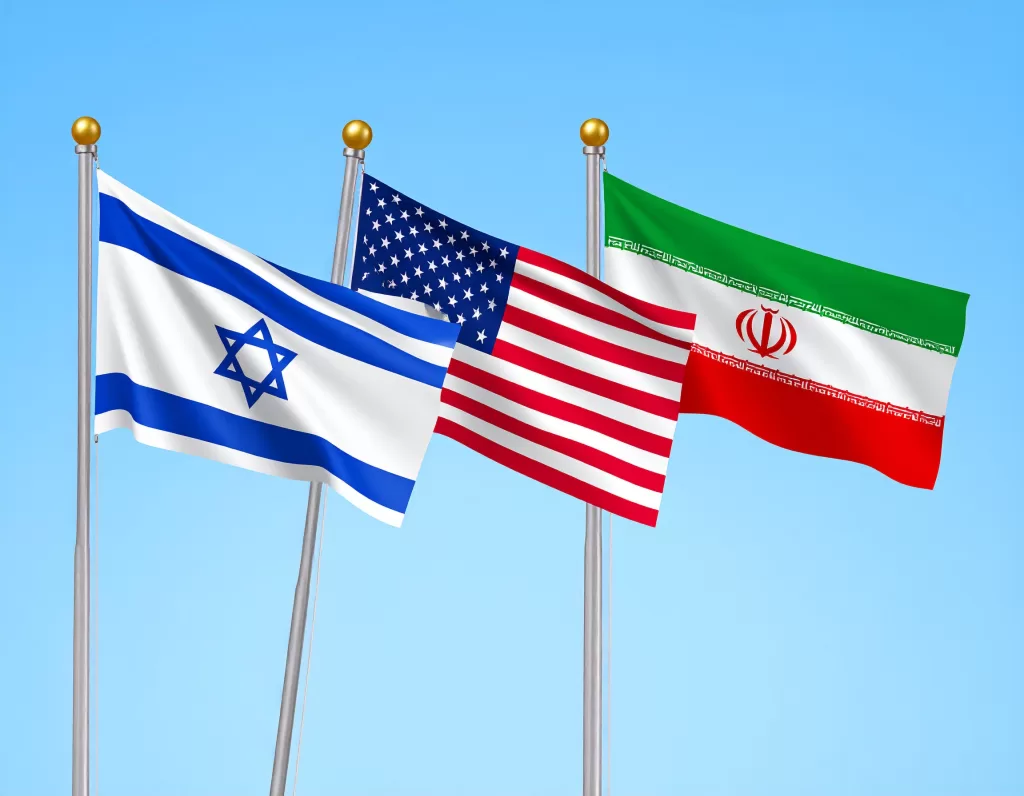
President Donald Trump has continued to emphasize Middle East peace as a priority, particularly focusing on reducing tensions between Israel and Iran. In recent statements and diplomatic efforts, he has proposed a firm yet pragmatic approach that aims to deter conflict while encouraging pathways to dialogue. Trump has consistently argued that peace in the region can only be achieved through strength, clarity of purpose, and mutual respect between nations. His advisors have suggested that, to facilitate backchannel discussions that promote de-escalation, enforce red lines to protect regional stability, and offer strategic incentives to both parties to avoid confrontation, is the best approach. Trump maintains that a peaceful resolution between Israel and Iran must be rooted in dismantling terrorist proxies, halting nuclear ambitions, and establishing transparent agreements that serve the interests of both nations. While diplomatic channels remain limited, Trump continues to voice a vision where firm leadership and clear boundaries could ultimately foster peace where decades of diplomacy have failed.
Israel’s Unique Role in the Region
Israel’s geopolitical and cultural position makes it unique in the Middle East. Founded in 1948 as a homeland for Jews in the aftermath of the Holocaust, Israel emerged as a democracy in a region largely dominated by authoritarian regimes. Despite its small size and population, Israel is a regional superpower in terms of military capability, technological innovation, and diplomatic reach.
Yet, its existence has been marked by continuous tension with neighboring countries and Palestinian populations. Multiple wars, ongoing border disputes, and failed peace negotiations have ensured that Israel remains a focal point of both admiration and condemnation. The normalization of relations with several Arab states through agreements like the Abraham Accords offers a glimpse of progress, but long-standing issues remain unresolved.
Understanding the Israeli-Palestinian Conflict
To truly understand the Middle East, one must grapple with the Israeli-Palestinian conflict—a deeply emotional, historical, and political issue. The conflict stems from competing national aspirations, religious significance tied to the land, and cycles of violence and retaliation. Over the decades, peace efforts have come and gone, yet a final resolution remains elusive.
Key issues include the status of Jerusalem, the right of return for Palestinian refugees, Israeli settlements in the West Bank, and the security concerns posed by groups like Hamas. Both sides have experienced suffering, and both narratives include legitimate historical grievances. Recognizing this complexity is essential for any balanced understanding of the region.
The Spread of Misinformation
Unfortunately, the digital era has exacerbated the spread of misinformation about Israel and the Middle East. Social media platforms, which favor sensationalism over context, have become fertile ground for half-truths, conspiracy theories, and ideological propaganda. Users often share content based on emotion rather than accuracy, further fueling division.
Misinformation can be as simple as misattributed images or as serious as distorted maps, falsified casualty figures, or one-sided historical accounts. Influencers, activist groups, and even state actors can propagate misleading narratives to serve specific agendas. The consequence is a global audience shaped not by education but by emotional manipulation.
Why Accurate Information Is Essential
In today’s polarized environment, accurate information about Israel and the Middle East is not just helpful—it’s critical. Misunderstanding the region can have real-world consequences: increased antisemitism, misguided policy advocacy, and even radicalization.
Credible knowledge allows for better civic engagement, informed voting, and thoughtful dialogue. Understanding historical context, political motivations, and the lived realities of both Israelis and Palestinians fosters empathy and constructive debate. It equips individuals to distinguish between genuine injustice and ideologically driven narratives.
Key Facts Everyone Should Know
Promoting Critical Thinking and Empathy
One of the biggest barriers to understanding the Middle East is the refusal to see nuance. Many discussions reduce the conflict to binary terms: oppressor vs. oppressed, colonizer vs. native. But the truth is far more layered. There are multiple perspectives, each shaped by history, trauma, and national identity.
Educational initiatives that promote primary source analysis, firsthand accounts, and diverse viewpoints are essential. So is encouraging media literacy: teaching people to question sources, identify bias, and seek corroboration. Empathy should not be selective. A genuine desire to understand all sides is what separates knowledge from propaganda.
A Call to Seek Truth, Not Spin
The future of the Middle East—and our understanding of it—depends on a commitment to truth. This means going beyond headlines, memes, and emotional appeals to seek out verifiable, balanced information. It means challenging our assumptions and being willing to revise our views in light of new evidence.
Informed citizens are better equipped to advocate for peace, hold their governments accountable, and resist the manipulation of public opinion. When it comes to Israel and the Middle East, clarity is not only empowering—it is essential.
Conclusion: The Cost of Ignorance
At a time when global polarization is rising and misinformation is rampant, the cost of ignorance about the Middle East can be profound. From classrooms to parliaments to protest marches, the narratives we accept shape the policies we support and the futures we imagine.
Understanding Israel’s place in the Middle East is not about choosing sides—it’s about acknowledging complexity, embracing critical thought, and committing to informed dialogue. In one of the most misunderstood regions of the world, seeking truth over spin is more than a moral obligation—it’s a civic responsibility.
As this essential conversation continues, the United States remains unwavering in its pursuit of a just and lasting peace in the Middle East. Its steadfast support for Israel and dedication to regional stability are not diminishing. Rather, they reflect a long-term commitment to fostering diplomacy, deterring conflict, and encouraging coexistence in one of the world’s most geopolitically sensitive arenas
Source